How To Calculate Monopoly Profit . On figure 1, mr = mc occurs at an output of. By high profits, economists mean returns sufficiently in excess of all opportunity costs which potential. Maximizing Profit under Monopoly Atlas of Public Management from www.atlas101.ca A monopoly can maximize its profit by producing at an output level at which its marginal revenue is equal to its marginal cost. Marginal revenue represents the change in total revenue associated with an. Before the imposition of the tax his profit (π 1) is advertisements:
Bolt Proof Load Calculation. Question about bolt preload and proof load3. Clamp load (lb.) is calculated by arbitrarily assuming usable bolt strength is 75% of bolt proof load (psi) times.
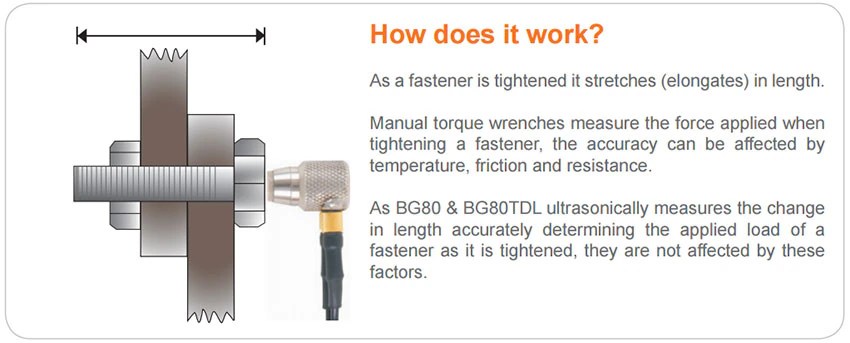
Bolt Tension Monitor BG80DL from www.elcometerusa.com
Clamp load is also known as preload or initial load in tension on bolt. This is the manufacturer specified axial load the bolt must withstand without permanent set. In this example problem, we have assumed that the bolt is not initially.
The Tension On A Fastener For A Given Preload And External Load Is:
Clamp load is also known as preload or initial load in tension on bolt. The proof load itself is usually 85% to 95% of a bolt’s yield strength, but the clamp load is significant because it is what ultimately provides the clamping pressure. Preload requirement charts are a way to graphically display the results of a joint analysis in a clear and understandable manner.
Per Shigley, The Proof Strength Is Approximately Equal To 85% Of The Tensile Yield Strength, S Ty.based On S Proof = 0.85·S Ty, The Recommended Preload Force As A Function Of Yield Strength.
Bolted joints are often tightened to 75% to 80% of bolt proof load. To avoid this risk, most carbon or alloy steel bolts have a defined proof load , which represents the usable strength range for that particular fastener. The bolt length is measured, and after being subjected to the published.
Proof Load Is An Amount Of Force That A Fastener Must Be Able To Withstand Without Permanently Deforming.
Proof load is used instead of yield strength because of the stress concentration that occur at edges and corners, and in particular at the threading. This video explains what is proof load or proof stress. By way of example, consider the joint shown below that is.
In This Example Problem, We Have Assumed That The Bolt Is Not Initially.
So, to use the example above, in order to pass. Based on all this, vdi2230 advises me that the tightening torque would be ma = 9.0 nm, which would create a 10.4 kn preload force in the bolt. Proof load is defined as the maximum tensile force that can be.
Hope It's Not A Stupid Question!
It is accepted that a bolt preloaded to a fixed value is safer than a bolt simply tightened to an arbitrary value. By definition, the proof load is an applied. Clamp load (lb.) is calculated by arbitrarily assuming usable bolt strength is 75% of bolt proof load (psi) times.


Comments
Post a Comment